A Table Saw for a One Car Garage
 Callum Reith-Sowande
I remember standing in a cramped workshop back in the eighties, surrounded by more dust than actual timber, trying to make sense of a massive, cast-iron beast that took up every square inch of floor space. I spent more time fighting the machine's footprint than I did actually cutting wood, and it taught me a hard lesson about what really matters. Most of the glossy magazines will try to sell you on horsepower and fancy digital readouts, but they don't tell you the truth about how to review a table saw for a small shop when you've only got a few feet of clearance and a dream. You don't need a factory floor in your garage; you need a tool that respects your space and your sanity.
I’m not here to give you a sales pitch or read off a spec sheet like some brochure. I’m going to show you how to look past the marketing fluff and judge a saw by its ability to hold a true line and fit where it’s told. We’re going to focus on the things that actually impact your work: stability, ease of maintenance, and whether that machine is a lifetime investment or just another piece of disposable junk.
Prioritizing Table Saw Accuracy and Precision Over Raw Horsepower
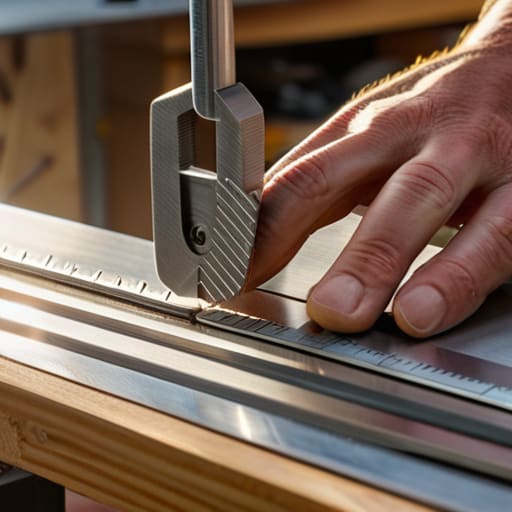
You’ll see plenty of sales brochures shouting about horsepower and motor revolutions, but in a tight workspace, those big numbers are often just noise. A massive motor doesn't mean much if the fence wanders a fraction of a millimetre mid-cut. When you’re looking at benchtop vs contractor saws, don't get blinded by the sheer scale of the machine. I’ve spent enough years teaching apprentices that a tool is only as good as the repeatable result it gives you. If you can't trust the machine to hold a line, all that power is just helping you make mistakes faster.
In a small shop, you aren't building a factory; you're mastering your craft. You need to focus on table saw accuracy and precision—specifically how the arbor holds true and how the miter gauge behaves. I’d much rather have a smaller, steady motor that I can dial in perfectly than a beast of a machine that vibrates the teeth out of my workbench. True workshop footprint optimization isn't just about saving floor space; it's about ensuring every inch of the tool you do have works with surgical intent.
Benchtop vs Contractor Saws Avoiding the Heavy Metal Trap
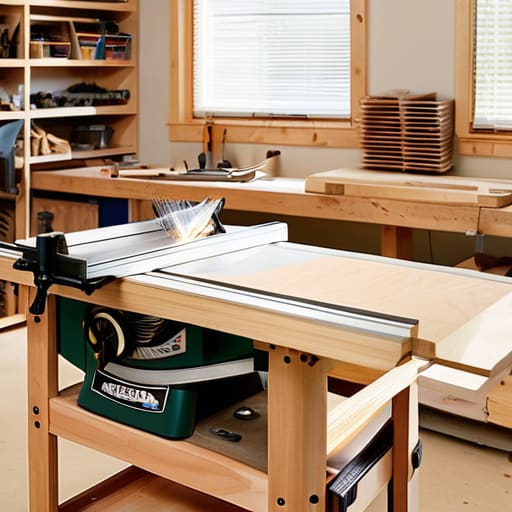
When you’re looking at the choice between benchtop vs contractor saws, it’s easy to get lured in by the promise of more iron and a bigger motor. I’ve seen plenty of lads buy a heavy contractor saw thinking it’ll make them a better craftsman, only to find it sitting in the middle of their floor like a permanent monument to poor planning. A massive saw might feel substantial, but if it forces you to work in a cramped, awkward position, you’ve already lost the battle for precision.
In a tight space, workshop footprint optimization isn't just a fancy phrase; it’s the difference between a productive afternoon and a headache. I’ve always preferred a solid benchtop model that I can tuck away when the job's done. You don't need a machine that takes up half the room to get a clean, square cut. If you can't move around your tool with ease, you're just fighting the machine instead of mastering the wood. Focus on a tool that fits your workflow, not one that dictates it.
Five Things to Look for Before You Open Your Wallet
- Check the fence, not the motor. A massive motor won't save you if the fence wanders half a millimetre to the left halfway through a rip. If the fence isn't dead-on and repeatable, that saw is nothing more than a loud, expensive paperweight.
- Mind the footprint and the "swing" room. It’s one thing to fit the saw on your bench, but it’s another thing entirely to have enough space to actually run a piece of timber through it. If you can't move around the machine without tripping over your own feet, you'll never work with any sort of rhythm.
- Look for mobility, but don't settle for flimsy. In a small shop, you'll be moving that saw more often than you'd like. Look for a machine that can sit on a decent, locking stand—something that stays put when you're cutting, rather than dancing across the floor.
- Inspect the table surface for flatness. I've seen too many modern saws with tables that look fine until you put a square to them. If the table isn't flat, your workpiece won't sit true, and you'll spend more time fighting the machine than doing the joinery.
- Demand easy access to adjustments. If you have to strip the whole machine down just to square the blade or adjust the height, you'll stop doing it. A good tool should be easy to maintain and easy to tweak; if it’s too complicated to service, it’s not a tool, it’s a liability.
Choosing Wisely for the Long Haul
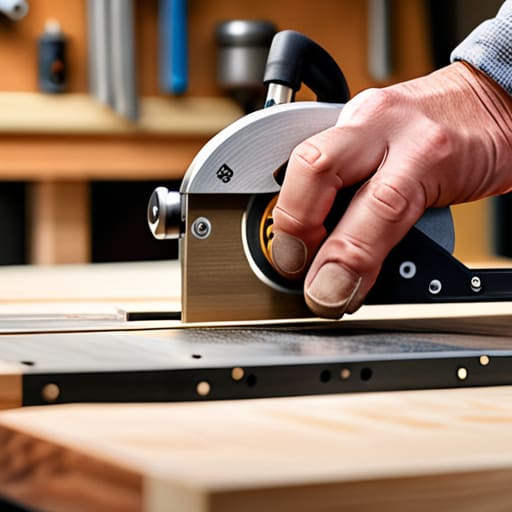
At the end of the day, reviewing a saw for a tight space isn't about finding the biggest motor or the flashiest features in a catalogue. It's about balance. You need to look past the marketing fluff and focus on whether the machine can actually hold a line without taking up every square inch of your floor. Remember, a saw that is too large to move safely is a liability, and a saw that lacks precision will only leave you fighting the wood. Focus on the build quality and the ease of adjustment; if you can't fine-tune it, you don't truly own it. A small shop demands a tool that works with you, not one that dictates how you move.
I’ve spent forty years watching men buy expensive, heavy machinery only to realize they’ve built a cage around themselves instead of a workshop. Don't make that mistake. Invest in a machine that respects your skill and your space. A well-chosen saw, maintained with care and kept sharp, will serve you far longer than any disposable piece of kit. Build your shop around your craft, not around your tools. If you choose a machine that prioritizes accuracy over sheer bulk, you'll find that you aren't just making cuts—you're mastering your trade.