When a Laser Level Earns Its Keep
 Callum Reith-Sowande
I spent forty years on site, and if there is one thing I’ve learned, it’s that most people spend far too much time reading glossy brochures instead of looking at the actual tool. You’ll see these online guides trying to teach you how to review a laser level by listing every single technical specification and fancy feature the manufacturer has dreamed up, but that’s just noise. A spec sheet doesn't tell you if that beam is going to dance and flicker the moment you step into a bit of sunlight, or if the tripod mount feels like it’s made of cheap, brittle plastic that’ll snap before you’ve even finished your first layout.
I’m not here to give you a lecture on lumens or digital interfaces. My goal is to show you how to test a tool for what it actually does when the work gets heavy. I’ll show you how to check for a steady line, how to see if the casing can actually handle a bit of a bump, and how to spot the difference between a precision instrument and a disposable gadget that'll be in a skip by Christmas. We’re going to look at these things through the eyes of someone who knows that if a tool isn't reliable, it's just taking up space.
The Brutal Truth of Self Leveling Mechanism Evaluation
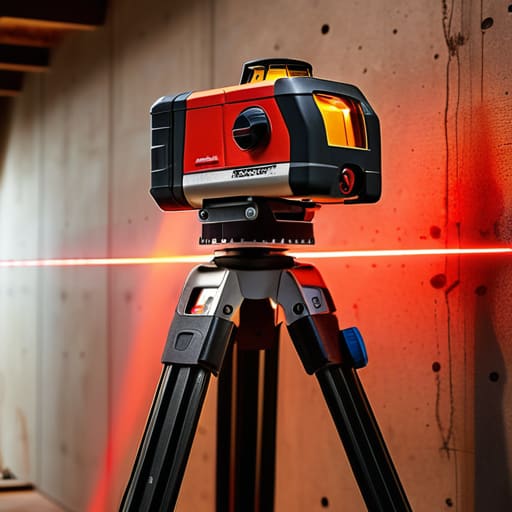
You can buy a tool with a fancy carrying case and a heavy-duty housing, but if the internals are rubbish, it’s nothing more than a paperweight. When I’m looking at a new unit, I don't care about the marketing fluff; I care about the self-leveling mechanism evaluation. I want to see how it handles a bit of a shake. If you bump the tripod or move the base, that line should find its level quickly and stay there without dancing around like a nervous apprentice. If it takes too long to settle, or worse, if it keeps blinking because it can’t find its center, you’ll spend more time fighting the tool than actually doing the work.
Once you know it levels, you have to put it through a proper laser level calibration test. I’ll set it up at one end of the workshop, mark a point, and then move the unit to the far side to see if that line still hits the mark. If there’s even a hair’s breadth of deviation, it’s useless for anything beyond rough framing. A tool that lies to you is worse than no tool at all.
Testing Cross Line Laser Precision Before It Fails You

Once you’ve confirmed the mechanism isn't fighting itself, you need to see if that line actually holds true over a distance. I never trust a tool just because it looks steady sitting on the bench. I take it out to the furthest wall in the workshop and set up a proper laser level calibration test. You want to project that line onto a flat surface at least twenty or thirty feet away. If you see any wobbling or a slight drift as the unit settles, put it back on the shelf. A line that isn't perfectly straight is worse than no line at all; it'll lead you to build a whole staircase that's nothing but a trip hazard.
Next, don't let the shop lights fool you. Most of these gadgets look fine in a dim corner, but you need to check the line visibility in bright light. If you can't see the beam clearly when the sun is hitting the floor through the windows, you'll spend half your day squinting and cursing. A tool is only as good as its ability to work in the real world, not just under a controlled workbench lamp.
Five Things That Actually Matter When You're Testing a Level
- Don't just look at the light; check the visibility in real conditions. A laser that looks bright in a dark workshop is useless when you're standing in a dusty site under a midday sun. If you can't see that line clearly without squinting like an old man, put it back on the shelf.
- Test the battery life under a real load. These companies love to boast about hours of use, but they're usually testing it in a vacuum. I want to know if that thing is going to die halfway through a floor layout, leaving me staring at a dead plastic box.
- Check the build quality of the housing. I've spent forty years seeing cheap gear get knocked off a scaffold and turn into scrap. If the casing feels thin or the battery door doesn't click home with a solid snap, it won't survive a single week in a proper tool bag.
- Look at how it handles a bump. A good self-leveling unit should be steady. I like to give the tripod a little nudge—not a hammer blow, mind you—to see how quickly the line settles. If it wobbles like a jelly for ten seconds, it's going to drive you mad.
- See if you can actually maintain it. I won't own a tool I can't repair, and the same goes for the gear I recommend. Check if the mounting points are standard and if the glass is easy to clean without scratching it. If it's a sealed unit that's impossible to service, it's just more future landfill.
Don't Buy a Paperweight
At the end of the day, reviewing a laser level isn't about reading a glossy brochure or counting how many buttons it has on the casing. It’s about whether that beam stays true when the job gets messy. You’ve got to look past the marketing fluff and test the self-leveling speed, ensure the lines are crisp enough to read at a distance, and verify that the housing can actually take a bit of a knock without the internals going wonky. If you don't put it through its paces under real-world conditions, you aren't buying a tool; you're just buying a fancy, expensive paperweight that's going to let you down when you're halfway through a fit-out.
I’ve spent forty years learning that the wrong tool is often more work than no tool at all. A laser level should be an extension of your eye, something you can trust implicitly so you can focus on the timber in front of you. Don't be swayed by the latest gadget if it lacks the substance and durability of a proper piece of kit. Buy something that works, something you can rely on, and something that respects your time. In this trade, precision isn't a luxury—it's the bare minimum. Get it right the first time, and you won't have to do the job twice.