The Jig You Made and Cannot Find
 Callum Reith-Sowande
I spent thirty years on job sites and another ten in a classroom, and if there is one thing that gets under my skin, it’s the way modern woodworking shops are being sold. You go into a shop now and see people spending hundreds of pounds on fancy, plastic-moulded drawer systems and high-tech modular units just to figure out how to store jigs. It’s a racket. Most of those "specialist" organizers are nothing more than expensive ways to hide your clutter, and they'll likely crack the first time you drop a heavy crosscut sled on them. You don't need a gadget from a catalogue; you need a sensible system that respects the tool.
I’m not here to sell you on some over-engineered nonsense that requires a manual to understand. Instead, I’m going to show you how I manage my own workshop using nothing but basic timber, some sturdy fasteners, and a bit of common sense. I’ll be sharing the exact methods I’ve used for decades to keep my workshop functional and my workspace clear. We’re going to focus on practical, lasting solutions that ensure your jigs are ready to work the moment you need them, rather than becoming something you have to hunt for.
Custom Jig Holders Building Speed Into Your Workflow
If you’re still leaning your tapering jigs against a workbench or shoving them into a drawer, you’re wasting time you don't have. I spent years watching apprentices trip over half-finished setups just because nothing had a proper home. I’ve found that the best way to keep a shop running is to build custom jig holders directly into your wall or bench. I like to use a simple French cleat system; it’s sturdy, it’s honest, and it lets you move a jig exactly where you need it without a struggle.
When you build these dedicated spots, you aren't just tidying up; you're protecting your investment. A heavy crosscut sled or a delicate tapering jig shouldn't be tossed into a pile where the edges can get knocked or the fine-tuned surfaces can get scuffed. By giving each piece a specific silhouette on the wall, you make preventing tool damage a natural part of your routine. If a jig doesn't have a slot waiting for it, it doesn't belong on the bench. It’s about discipline, not just tidiness.
Organizing Shop Accessories Before They Become Clutter
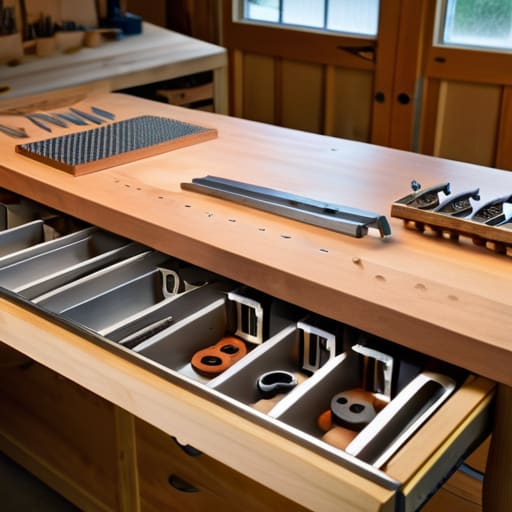
It isn't just the big, bulky jigs that cause a mess; it’s the little things—the stops, the fences, and the small guiding blocks that seem to vanish the moment you actually need them. If you treat these bits of kit like loose change, you’ll end up with a workbench buried in scrap. I’ve spent too many years watching apprentices lose their rhythm because they were digging through a drawer of mixed-up accessories. Organizing shop accessories isn't about making things look pretty for a magazine; it’s about keeping your workflow steady.
I find that a simple shadow board or a dedicated tray for the smaller components works best. When everything has a specific slot, you can see at a glance if something is missing. This is a vital part of preventing tool damage, too. If you just toss a precision-cut guide into a bin full of heavy metal clamps, you're asking for a nick or a dent that'll ruin its accuracy. Treat your accessories with the same respect you give your chisels, and they'll serve you well for decades.
Five Rules for Keeping Your Jigs Ready When You Need Them
- Stop stacking them like firewood. If you pile your crosscut sleds or tapering jigs on top of one another, you’ll end up scratching the faces or, worse, knocking them out of alignment. Give each one its own footprint on a shelf or a dedicated peg.
- Label the edges, not the faces. I’ve seen too many lads wandering around a shop looking for a specific drilling jig because the top is covered in sawdust. Use a permanent marker or a brass tag on the side of the tool so you can see what it is from across the room.
- Protect the precision surfaces. A jig is only as good as its flatness. If you’ve got a fine-tuned fence or a machined surface, don't just toss it on a workbench. Wrap it in a bit of scrap felt or keep it in a simple wooden box to stop it from getting nicked by a stray chisel.
- Keep the heavy stuff low. It’s common sense, but I’ve seen apprentices try to pull a heavy miter sled off a high shelf and nearly take their toes off. Store the big, cumbersome jigs at waist height or lower so you aren't wrestling with them every time you want to make a cut.
- Group them by task, not by size. Don't just put all the "small things" in one drawer. Keep your marking jigs near your layout tools and your assembly jigs near your workbenches. If you have to walk across the shop every time you switch tasks, you're wasting time you could be using to actually work.
A Proper Workshop is Never Finished
At the end of the day, organizing your jigs isn't about making a workshop look pretty for a magazine spread; it’s about respecting your time. If you’ve taken the time to build custom holders or clear out the clutter of loose accessories, you’ve already done the hard part. You’ve moved away from the chaos of hunting for a crosscut sled every time you need to make a precision cut, and you’ve moved toward a workflow where everything has a home. Remember, a jig that sits in a pile is a jig that won't be used, and a jig that’s buried under sawdust is a tool that's effectively lost. Treat your jigs with the same care you give your finest chisels, and they’ll reward you with accuracy every single time.
I spent forty years on sites and another ten in a classroom, and if there is one thing I learned, it’s that the quality of your work is dictated by the state of your shop. You can buy the most expensive power saws on the market, but they won't save you if you're fighting your own setup. A well-organized shop allows you to slow down, think, and execute with intention. Don't let your tools become consumables that you just toss aside when they get in the way. Build your systems, maintain your space, and keep your focus on the craft, not the clutter.