Extractor Airflow and What You Need
 Callum Reith-Sowande
I spent thirty years on-site and another ten in a college workshop, and if there is one thing that gets my goat, it’s the way tool manufacturers try to sell you a solution that’s more headache than help. You walk into a shop and see these massive, expensive industrial units with enough bells and whistles to launch a rocket, but they can’t even pick up a handful of fine MDF dust without choking. Most of the advice you find online about how to choose a dust extractor is written by people who have never actually had to wipe sawdust off their lungs at the end of a shift. They focus on fancy digital displays and brand names, but they ignore the fundamental physics of airflow and suction.
I’m not here to sell you a shiny new toy or a piece of kit that’ll end up in a skip in two years because it’s built out of cheap plastic. I’m going to tell you exactly what matters: CFM, static pressure, and whether or not you can actually maintain the thing when it gets clogged. I'll show you how to find a machine that works as hard as you do, without wasting your hard-earned money on unnecessary nonsense.
The Real Math Why Cfm vs Static Pressure Matters
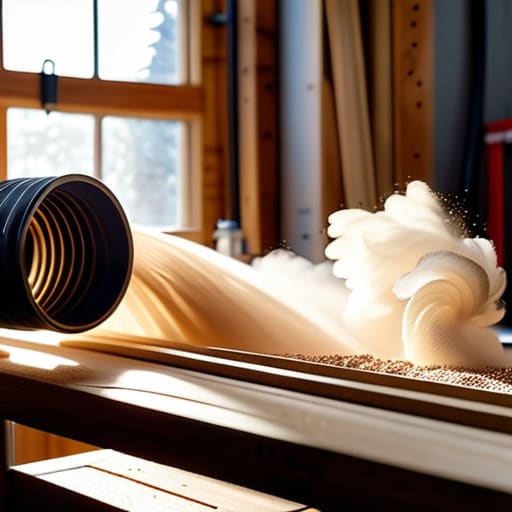
Now, don't let the lads in the sales office confuse you with a single number on a spec sheet. They’ll shout about high CFM like it’s the only thing that matters, but that’s only half the story. CFM tells you how much air is moving, but it doesn't tell you if that air can actually make it through your hose. If you’ve got a long run of narrow tubing or a handful of bends, you're going to run into a wall. That's where you need to look at CFM vs static pressure.
Think of it like this: CFM is the wind, but static pressure is the strength required to push that wind through a narrow gap. If your machine has high airflow but no "oomph" to overcome the resistance of your setup, you’re just spinning your wheels. You'll end up with a machine that sounds like a jet engine but leaves a pile of fine dust right where you're working. For proper woodworking dust management, you need a balance. You want enough volume to move the waste, but enough pressure to ensure it doesn't just sit in the hose.
Dont Trade Lung Health for Cheap Industrial Vacuum Suction Power
You’ll see plenty of shops running on nothing more than a standard shop vac, thinking that if it’s loud and has decent industrial vacuum suction power, the job is done. That’s a mistake I’ve seen too many apprentices make. A vacuum that just moves air around without actually trapping the fine, invisible stuff is nothing more than a glorified fan blowing poison into your face. You aren't just clearing away the shavings; you're trying to manage the microscopic particles that settle deep in your lungs long after you've put the tools away.
If you want to do this right, you need to look past the raw suction and focus on HEPA filter efficiency. It doesn't matter how much air you're moving if that air is just passing through a cheap paper bag and spitting fine dust right back into your workspace. Proper woodworking dust management means ensuring that once a particle enters the system, it stays there. Don't be fooled by a low price tag; a machine that can't hold a seal or filter properly is just a waste of good money and even worse for your health.
Five Things to Look for Before You Part With Your Money
- Check the hose diameter first. I’ve seen too many lads buy a high-end machine only to choke it with a narrow, flimsy hose that wouldn't pull a feather through. If the hose is a bottleneck, the motor's power is wasted.
- Look for a machine with a good filter cleaning mechanism. If you have to stop every ten minutes to bang the canister against the wall just to get the suction back, you aren't working; you're just maintaining a vacuum.
- Don't ignore the noise. A workshop is loud enough with the saws and planes; you don't need a vacuum that sounds like a jet engine taking off right next to your ear. It'll wear you down before the day is half done.
- Make sure it has a dedicated port for your power tools. If you're constantly fumbling with tape or improvised clamps to get the extractor to stay on your sander, you'll eventually give up and just let the dust settle in your lungs.
- Buy something you can actually service. I won't touch a machine held together by glued plastic bits that you have to bin the moment a seal fails. Look for sturdy construction and accessible parts that can be replaced, not discarded.
Buying Once, Buying Right
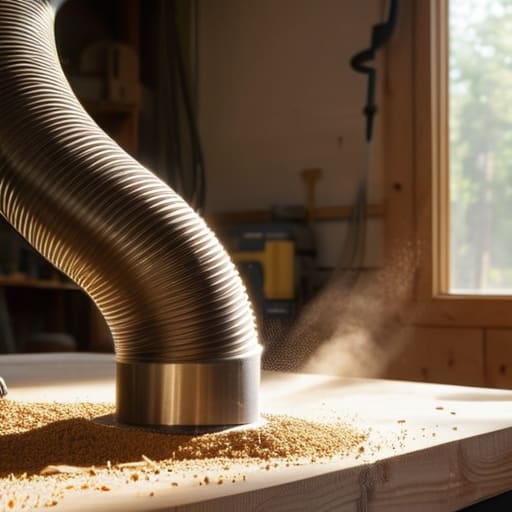
At the end of the day, choosing a dust extractor isn't about finding the cheapest unit on the shelf or the one with the loudest motor. It’s about understanding the difference between raw suction and actual airflow. You need to look past the marketing fluff and focus on the static pressure required to pull dust through your long hoses, and ensure your CFM is high enough to actually move the debris before it settles on your workpiece. Don't be fooled by a machine that sounds powerful but leaves a layer of fine powder on your bench; if it can't handle the volume of dust your tools produce, it’s nothing more than an expensive paperweight.
I’ve spent forty years in workshops, and I’ve learned that the tools you neglect are the ones that eventually fail you. A workshop is a place of precision and craft, not a place to cough your lungs out or spend half your time sweeping up. Investing in a proper extraction system is just as important as investing in a high-quality chisel or a well-tuned plane. Treat your lungs with the same respect you treat your timber. When you get your air right, you’ll find that the work flows better, your lungs feel clearer, and you can actually focus on the joinery instead of the mess.