Being a Good Neighbour With a Planer
 Callum Reith-Sowande
I remember sitting in my garden back when I was still teaching at the college, watching a lad next door try to "fix" his noise problem by building a massive, expensive plywood enclosure around his router. It looked like a coffin, and it did nothing but make the whole thing vibrate like a tuning fork, sending a low-frequency hum straight through his neighbor's living room walls. People think you need a massive budget or a soundproof bunker to solve the problem of how to reduce workshop noise for neighbours, but most of that high-tech gear is just expensive nonsense designed to sell more plastic.
I’m not here to sell you on acoustic foam that’ll peel off your walls in a week or some fancy, overpriced vibration isolator. What I’m going to give you is a bit of plain, honest common sense based on forty years of working with my hands. We’ll look at how a well-maintained edge can save your ears, how to manage the mechanical vibration that actually travels through the floor, and why sometimes the best way to be a good neighbor is simply to put the power tools down for an hour.
Mastering Soundproofing Workshop Walls With Surgical Accuracy

Now, if you’re serious about soundproofing workshop walls, don't go thinking you can just slap some thin sheets of egg-carton foam on the studs and call it a day. That’s a waste of good time and money. Real noise mitigation strategies start with mass. I’ve always found that if you can’t make the wall heavy enough to stop the sound waves from passing through, you’re just whistling in the wind. I prefer using heavy-duty mineral wool inside the cavities; it’s dense, it’s honest, and it actually does the job of soaking up those low-end thuds that travel through the structure.
You also have to consider how the vibration itself moves through the timber. I’ve seen many a lad try to fix a loud shop by just adding more acoustic foam for workshops, but if your lathe is rattling the very frame of the building, that foam won't do a lick of good. You need to decouple the machines from the floor. I swear by vibration isolation pads placed under any heavy stationary equipment. It’s about breaking the path of the energy before it ever reaches the neighbor's garden fence.
Strategic Noise Mitigation Strategies for the Disciplined Maker
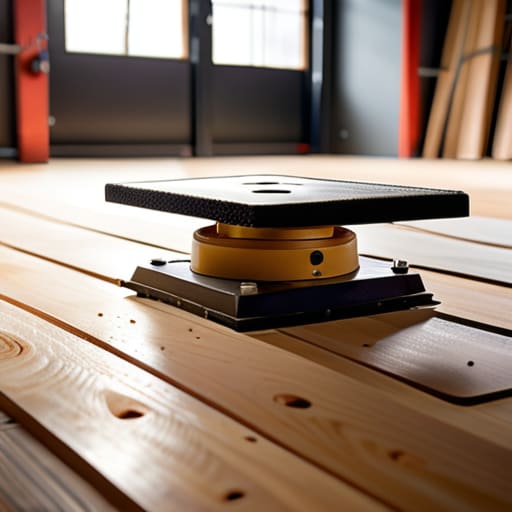
Now, if you’ve already tackled the walls, you need to look at what’s actually making the racket. Most of the noise isn't just the air moving; it's the floor shaking. When a heavy planer or a thicknesser is running, that vibration travels through the joists and right into the neighbor's living room. I’ve found that using vibration isolation pads under your heavier stationary machines does more for your sanity than any fancy curtain ever could. It breaks that physical connection between the machine and the structure of the house.
It’s also about how you manage your workflow. I’m a firm believer in the quiet way of doing things. If you can finish a joint with a well-honed chisel rather than a screaming router, do it. If you must use the power tools, try to keep your most aggressive tasks—the stuff that really pushes those machine decibel levels into the red—for times when you know the neighbors are out or settled in. It isn't about being timid; it's about being disciplined with your gear. A maker who respects his tools knows that controlling the environment is just as important as the cut itself.
Five Ways to Stop Being the Loudest House on the Street
- Check your tool bits before you start. Most of the screaming you hear from a router or a saw isn't the machine itself, but a dull bit fighting the timber. A sharp edge slices; a blunt one tears and vibrates. If you're making a racket, your tool is likely asking for a hone.
- Get your machines off the floor. If you’ve got a heavy band saw or a planer sitting directly on a concrete slab, that vibration travels straight through the foundation and into the neighbor's living room. Put some thick rubber matting or even some heavy-duty workshop scraps under the feet to break that connection.
- Manage your dust extraction. People forget that the high-pitched whine of a vacuum motor can be just as piercing as a saw. If you can, keep the extractor in a separate cupboard or a different room, and use insulated ducting to dampen the sound of the air rushing through.
- Stop the "air gaps" in your doors. Sound is like water; if there's a crack, it'll find its way out. A heavy workshop door with a proper rubber seal around the frame will do more for your neighbors' sanity than any expensive acoustic foam you can buy online.
- Time your heavy work. There’s no sense in running the thickness planer at seven in the morning on a Sunday. If you know a particular job is going to be a noisy one, save it for a Tuesday afternoon when the world is already busy and a bit of mechanical hum won't feel like an assault.
A Quiet Shop is a Productive Shop
At the end of the day, keeping the peace with the folks next door comes down to a bit of common sense and a lot of preparation. We’ve looked at how thickening your walls can stop that low-end rumble from traveling, and how choosing the right time to run the heavy machinery keeps you from becoming the local nuisance. It isn't just about adding insulation or dampening mats, though; it’s about the discipline of the maker. If you manage your environment by isolating your vibrations and being mindful of your schedule, you’ll find that you aren't just protecting your neighbors, you're actually creating a much more controlled and professional workspace for yourself.
I’ve spent forty years listening to the difference between a machine that’s fighting the material and one that’s working with it. Most of the noise we complain about is just wasted energy—friction, vibration, and blunt edges. If you take the time to maintain your tools and respect the space around you, you’ll find a different kind of satisfaction in your work. There is a certain dignity in being able to craft something beautiful without needing to scream to do it. Don't let your passion become a headache for someone else; instead, aim for that steady, quiet precision that only comes when you truly master your craft.