Burnishing a Card Scraper Properly
 Callum Reith-Sowande
Most people think they need a high-end orbital sander and a mountain of grit to get a surface smooth, but they’re just chasing their tails. I spent years watching apprentices spend hours sanding a tabletop, only to find the swirl marks still there once the finish went on. They’d complain about the tool being finicky, but the truth is, they just didn't know how to use a card scraper properly. I remember one particular job on a mahogany sideboard where the client wanted a glass-like finish; the power tools were doing more harm than good, leaving tiny scratches that no amount of paper could fix. I put the sander away, picked up a bit of steel, and let the scraper do the actual work.
In this guide, I’m going to strip away the nonsense and show you the real way to handle this bit of metal. We aren't going to talk about fancy, expensive gadgets you'll just throw in a drawer next month. Instead, I'll walk you through the proper way to burnish your edge, how to find that sweet spot of pressure, and how to read the grain so you aren't tearing the wood apart. If you want a finish that lasts without the dust and the noise, listen close.
Guide Overview
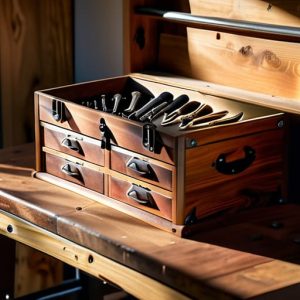
Tools & Supplies
- Card scraper (Steel tool for removing surface imperfections)
- Sharpening stone (To hone the burr/edge)
- Burnisher (To harden the edge)
- Wood workpiece (1 piece of scrap or project wood)
- Honing oil or water (Small amount for sharpening)
- Safety glasses (1 pair for eye protection)
Step-by-Step Instructions
- 1. First, you need to get your edge right. You can't just take a piece of steel off the shelf and expect it to bite; you need to create a burr along the entire length of the edge. I use a fine diamond stone for this, working the steel until I can feel that tiny lip of metal curling over the other side. If you don't have a burr, you're just rubbing a piece of metal against the wood, and you'll waste your afternoon doing nothing.
- 2. Once the edge is keen, you have to "turn the burnish." This is the part where most young lads I taught would lose patience. Take a burnishing tool—a hardened steel rod—and rub it firmly along the very tip of the edge. You aren't trying to grind the metal away; you're just compressing the molecules to make that edge harder and more resilient. It’s a bit like tempering a blade, and it's the difference between a scraper that lasts a month and one that lasts a lifetime.
- 3. Now, pick up your workpiece. Don't try to hold it in a heavy vice like you're using a router; instead, lay it flat on your bench or hold it firmly in one hand if it's small enough. You want to be able to feel the grain. I always tell my students to read the wood before they even touch the steel to the surface. If you go against the grain, you'll tear the fibers right out, and no amount of sanding will fix that mess.
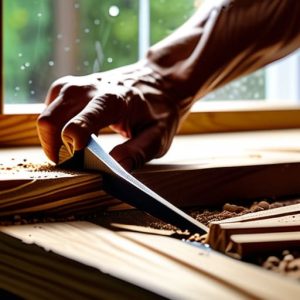
- 4. When you're ready to scrape, hold the tool with both hands—one for control and one to provide the pressure. You don't want to go heavy-handed here. Instead of pushing like you're trying to move a mountain, use a steady, sweeping motion. Keep the scraper at a slight angle to the wood, and let the edge do the work. You should see tiny, delicate curls of wood peeling away, not dust. If you see dust, your edge is blunt.
- 5. As you work, you'll notice the "bite" starts to feel soft. This happens because the edge is getting rounded over or the burr is flattening out. Don't keep pushing harder; that's how you end up with deep gouges. When it stops cutting cleanly, it’s time to reset the edge. You don't need a full regrind, just a quick pass on the stone to bring that burr back.
- 6. Finally, check your progress. Run your hand—very carefully, mind you—across the surface. A well-used scraper leaves a finish that's smoother than any orbital sander could ever dream of. You'll see a certain sheen to the wood fibers that tells you the surface is truly level. That’s the moment you realize that being patient with a piece of steel is worth far more than turning on a power tool.
Mastering the Card Scraper Technique for Woodworking
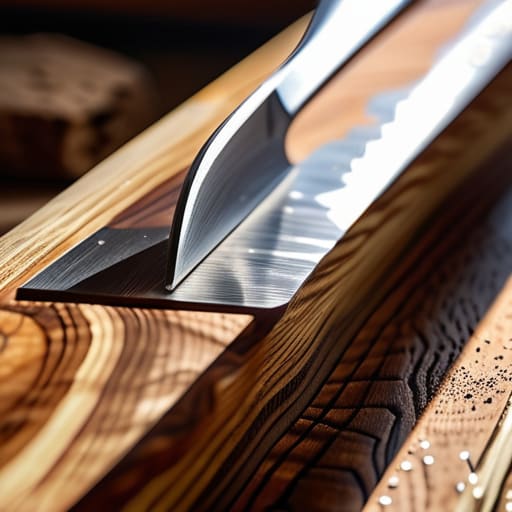
Now, once you’ve got the basics down, the real trick is learning how to read the wood. You can't just muscle through it. When you're working on removing tool marks with a scraper, you need to feel the resistance through the steel. If the tool starts to skid or chatter, you’re likely fighting the grain. I always tell my former students to watch the shavings; if they’re long and translucent, you’re doing fine, but if they start turning into fine dust, you’ve gone too deep or your burr is gone.
I also get asked a lot about scraping vs sanding wood. To my mind, a sander is just a way to hide poor workmanship under a layer of dust. A scraper actually cleans the fibers. If you want a finish that truly sings, you have to master the angle. Don't be afraid to lean into it slightly, but keep your strokes consistent. It’s about steady, controlled pressure rather than speed. If you respect the edge and listen to what the timber is telling you, the tool will do the heavy lifting.
Removing Tool Marks With a Scraper Instead of Grit
I’ve spent more time than I care to admit watching young lads reach for a random orbital sander the moment they see a slight unevenness in a board. It’s a mistake. Sanding is a lazy way out that often just leaves you with a surface full of microscopic scratches and rounded-off edges. When you're removing tool marks with a scraper, you aren't just smoothing the wood; you’re actually shearing off the high spots to reveal the true face of the grain. Unlike grit, which gets clogged with dust and loses its bite, a well-maintained steel blade stays consistent from the first pass to the last.
The real secret to scraping vs sanding wood comes down to how you handle the grain. If you find yourself fighting the material or seeing fuzzy patches, you're likely pushing against the grain or your edge has gone dull. A scraper allows for a level of control a sander can never match, especially when it comes to preventing wood grain tear out on tricky, figured pieces. Don't rush it. If you lean into the tool with a steady hand and a sharp edge, the wood will tell you exactly when it's ready.
A few things I learned the hard way
- Don't go overboard with the burnishing. I see young lads out there polishing the whole face of the steel until it's a mirror, but you only want that edge crisp and slightly raised. If you overdo it, you'll find yourself fighting the tool more than the wood.
- Watch your grain direction like a hawk. If the scraper starts to chatter or, worse, digs in and grabs, you've gone against the grain. Stop immediately, turn the piece or your hand, and find the flow. There's no sense in gouging a good piece of oak just because you're in a hurry.
- Keep your scrapings thin. If you're pulling up thick ribbons of wood, you're likely applying too much pressure or your edge isn't right. You want fine, translucent curls—almost like shavings of butter. That's how you know you're actually smoothing the surface rather than just tearing at it.
- Use your body weight, not just your wrists. I've seen plenty of people try to muscle a scraper with just their hands, and they end up with sore joints and an uneven finish. Lean into it slightly with your shoulder; let the weight of your arm do the heavy lifting.
- Listen to the sound. A good scraper has a steady, rhythmic hum. If it starts sounding harsh or screechy, your edge is dulling or you're pressing too hard. A sharp tool should sing, not scream.
Final Thoughts on the Scraper
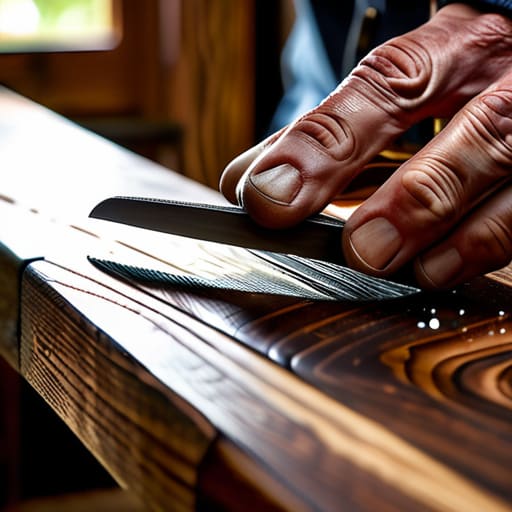
At the end of the day, mastering the card scraper comes down to two things: the quality of your burnish and your patience with the grain. You’ve learned that you don't need a pile of sandpaper to get a finish that glows; you just need a piece of steel that’s been properly prepared and a steady hand to guide it. Remember that the tool only works if you respect the wood. If you find yourself fighting the surface or seeing nothing but dust, stop what you're doing. It’s time to put the steel back on the burnisher and start again. There is no sense in forcing a dull edge to do a sharp tool's job.
I know it feels slower at first. I spent years watching youngsters reach for the orbital sander the second a surface looked uneven, but they miss the soul of the work. When you use a scraper, you aren't just smoothing a board; you are feeling the history of the timber under your palms. It is a quiet, meditative way to work that brings a level of precision no machine can touch. Stop chasing the convenience of the loud, vibrating mess and trust the edge. Once you see that glass-like finish for yourself, you won't want to go back to the grit.